
As head of King Charles III’s Sustainable Markets Initiative, Jennifer Jordan-Saifi is at the very tip of the spear when it comes to fighting for climate progress, while battling scepticism, short-termism and political inertia. In an increasingly fractured world, how does she envision change for shipping, this most global of global industries? And what role can events like Nor-Shipping play in enabling that shift?
“We have to speak about this…”
Jennifer Jordan-Saifi, the CEO of Sustainable Markets Initiative (SMI), has no time for tip-toeing around elephants in the room. And neither, she states, do we.
“Everyone got behind the UN’s 2030 Agenda for Sustainable Development and associated targets, but now it’s 2026,” she says, adding with understandable urgency, and more than a little frustration: “And what’s happening?”
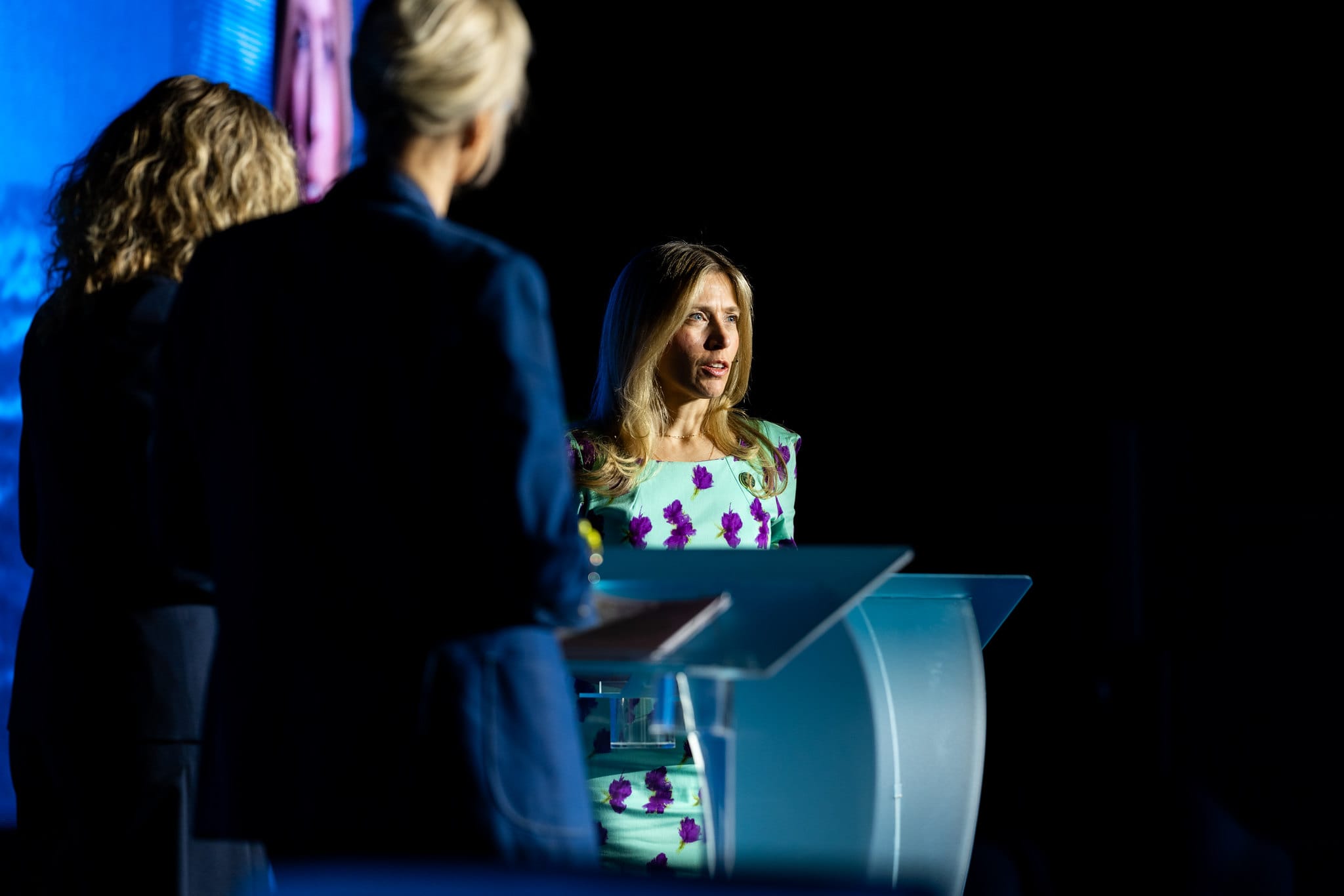
The question doesn’t just hang in the room, it confronts the elephant, pushing it up against the wall of Gamle Logen, the location for the first ever Oslo Ocean Days conference, squeezing it with all its might for a silent second.
“Well,” she continues, “it seems like the world is regressing, politics is regressing. Put simply, we are running out of time!
“So, the private sector, you, have to take the lead. The only way forward is forward, so let’s move.”
To say Jordan-Saifi participates in events like Nor-Shipping, where she spoke at the Ocean Leadership Conference in 2025, and Oslo Ocean Days with an agenda is somewhat of an understatement.
Jordan-Saifi is on a mission.
A mission with royal backing.
The big issue
SMI was launched by King Charles, then Prince of Wales, an impassioned environmentalist, in 2020 at the World Economic Forum in Davos. At the time he explained that our global economies “depend on the natural economy” and that both people and planet should profit from trade. He issued a clarion call for leaders – business and political ones – to rise to the challenge of mobilising influence, investment and networks to create a more sustainable future for our planet. SMI was handed a 10 year mandate to help supercharge that change.
That was January 2020. And, as we all know, the world was a very different place back then.
But, as Jordan-Saifi implies with politically seasoned caution, no matter what major challenges we face – and that includes the most pressing geopolitical, societal and economic ructions – there’s a constant underlying challenge with the potential to change everything.
“Geopolitics is stealing headlines at the moment and, naturally, that’s understandable,” she notes, adding that short-term security issues obviously garner more attention than long-term environmental ones.
“But I’ve had conversations with some shipowners recently and they’re almost like ‘thank you for putting sustainability back on the agenda,’ because that needs to be front of mind. There is real desire and commitment there with many private shipping businesses, and that’s fantastic to see. What we need now is momentum.”
Leaders should lead
Jordan-Saifi had – or rather, has – high hopes for shipping in terms of decarbonisation.
Had because, as a globally regulated industry under the auspices of the IMO, it’s theoretically possible to move as one under clear frameworks, towards clear targets. (Nothing needs to be added in terms of how that’s going at present.)
Has because, even without the global accord, she sees the seeds of real progress – both on an individual and regional basis.
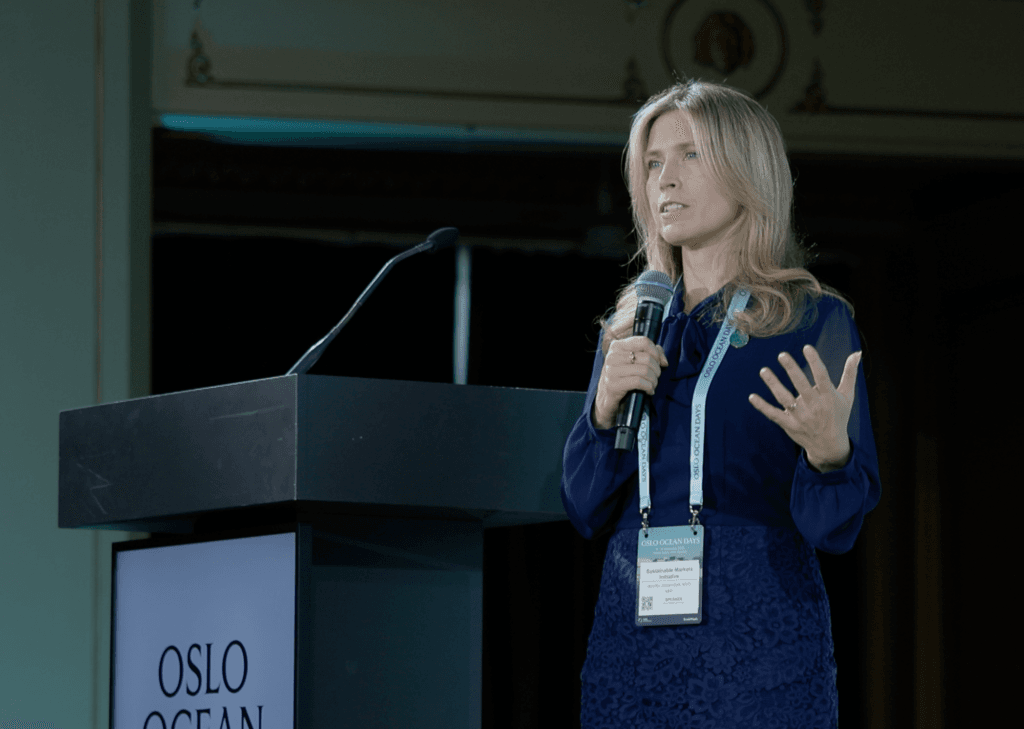
“It would be wonderful if we could have a whole-of-world solution governed by the IMO, I mean that’s what we were all hoping for,” she says, “but we can see the politicisation and fracturing there. You have some nation states adopting a ‘net zero… is that still a thing’ approach, while others are eager to progress.
“So, I know it’s counter to the original intention, but I think the regions, countries and individual owners that are ready should go. If China and Europe are ready, if we can build and strengthen green shipping corridors, then allow leaders to lead and the rest to follow. The pioneers can pave the way, share their learnings and, when they’re ready – when they see it actually working – others can step up and join in.”
Flexibility pays
But, of course, shipping is a business, so it’s not just regulations and ambitions that dictate the pace of change, it’s money.
Jordan-Saifi says that for an international industry there has to be international collaboration in terms of investment in future fuel choices, bunkering and technology, but, again, highlights the regional potential for progress rather than the global hurdles stymying it. She sees real possibilities to “hyper-scale” clean solutions such as Small Modular Reactors (SMRs), but is realistic over the development of the regulatory landscape.
In the now that is so crucial to her cause, she applauds individual owners already investing in fuels such as ammonia, while stating that dual fuel vessels in general, and those capable of wider flexibility in their energy mix, are a wise choice when “there’s probably no one silver bullet.”
Investment is there, Jordan-Saifi points out – nodding to the strength of some shipping stocks – but investors do not like uncertainty, and there’s no shortage of that at present.
Increasing awareness
Yet despite the flow of conversation to this point, Jordan-Saifi is unequivocally optimistic. With, she says, good cause.
Although some politicians and global events may be working to push sustainability off the agenda, others are striving to elevate it – and not just the SMI.
Shipowners, and there’s plenty of those attending Nor-Shipping and Oslo Ocean Days, are moving independently to enable greener fuels (Höegh Autoliners spoke of its investment in ammonia at today’s event) while consumers have a greater understanding of, and demands for, their product supply chains than ever before.
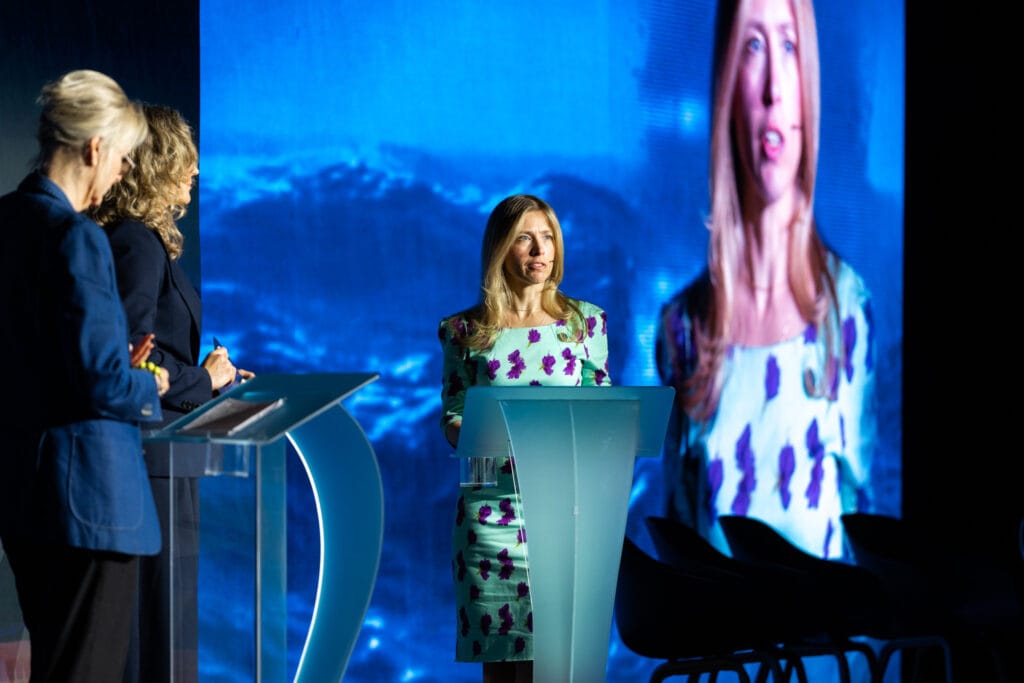
“Do not underestimate the power of the consumer,” she cautions. “Shipping has been brought into sharper focus in recent years and they’ve been paying attention. They understand emissions, they want to play their part in reducing them, and players right through the value chain need to bring them into the conversation in terms of supporting change.”
Communication, she notes, is key.
“Everyone has a part to play.”
Value creation
On the note of communication and playing a part, the SMI leader also points out that there’s plenty of progress that is, somewhat unfortunately, happening under the radar within the industry.
“I’ve spoken to many owners that have created huge efficiencies across their fleets,” Jordan-Saifi notes, adding that these have not necessarily been with headline-grabbing transformations, but rather with strategically smart step-by-step approaches.
“So, they’re reducing emissions, saving on fuel and realising both environmental and commercial gains. That’s the value creation of sustainability that sits at the heart of SMI’s mission. What’s more, that’s leadership too, right? So, we’d like to amplify their efforts – push that approach into the spotlight, to show what can be done now.”
Gathering commitment
Events such as the upcoming Nor-Shipping in 2027, are vital for progress, Jordan-Saifi stresses, due to both the interconnected and geographically scattered nature of this most globally important of industries.
“Shipping has a real opportunity to be at the forefront of change,” she says. “Yes, you could argue that having no one solution is a challenge, but the very fact there’s so many solutions is a huge advantage too – it means there’s many possibilities for progress. What we want to see is more and more companies leaning into that, demonstrating that ‘being the change’ is what really matters. In that way they become exemplars for others to follow.
“But of course, they have to talk about it, share learnings, discuss new innovations and inspire others, connecting individual progress into more collective momentum… and that’s exactly what happens at events like Nor-Shipping and Oslo Ocean Days. The international industry comes together to amplify and enable change. That is absolutely crucial.”
It’s the kind of collaborative approach that chimes perfectly with SMI’s mission – the kind of approach we’d all probably like to see from our politicians too.
Jordan-Saifi gives a nod rather than a quote, finishing with a final note of optimism.
“You know, it can feel like we’re sliding backwards, but we’re not,” she states. “Change is happening, progress is being made, we just have to do more… quickly. Now is our time!”